ON-378: Prediction Markets 🔮
Coverage on Polymarket, Opinion, Limitless, and Myriad Markets


📝 Editor’s Note:
The prediction-market space has entered a new era.
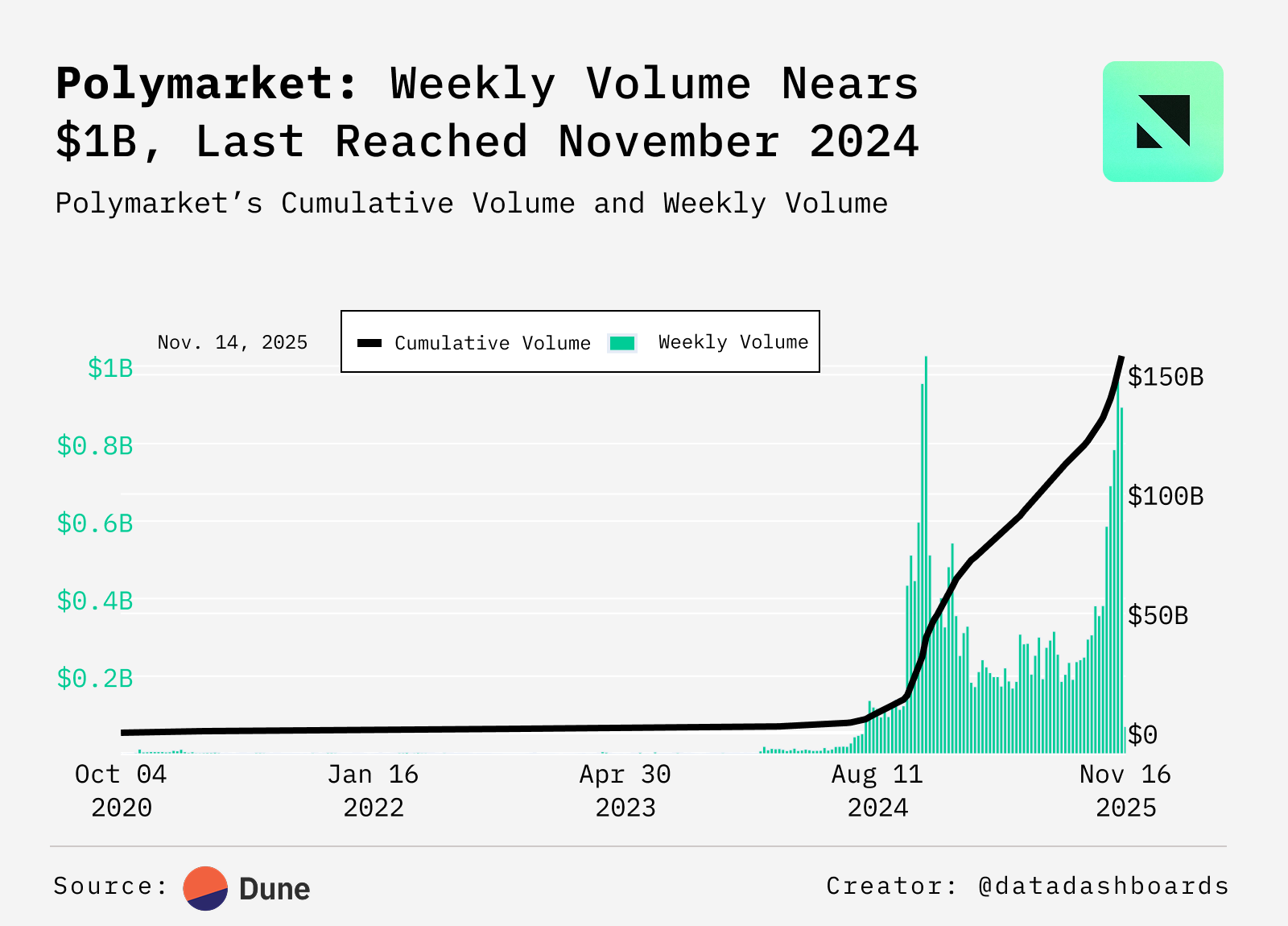
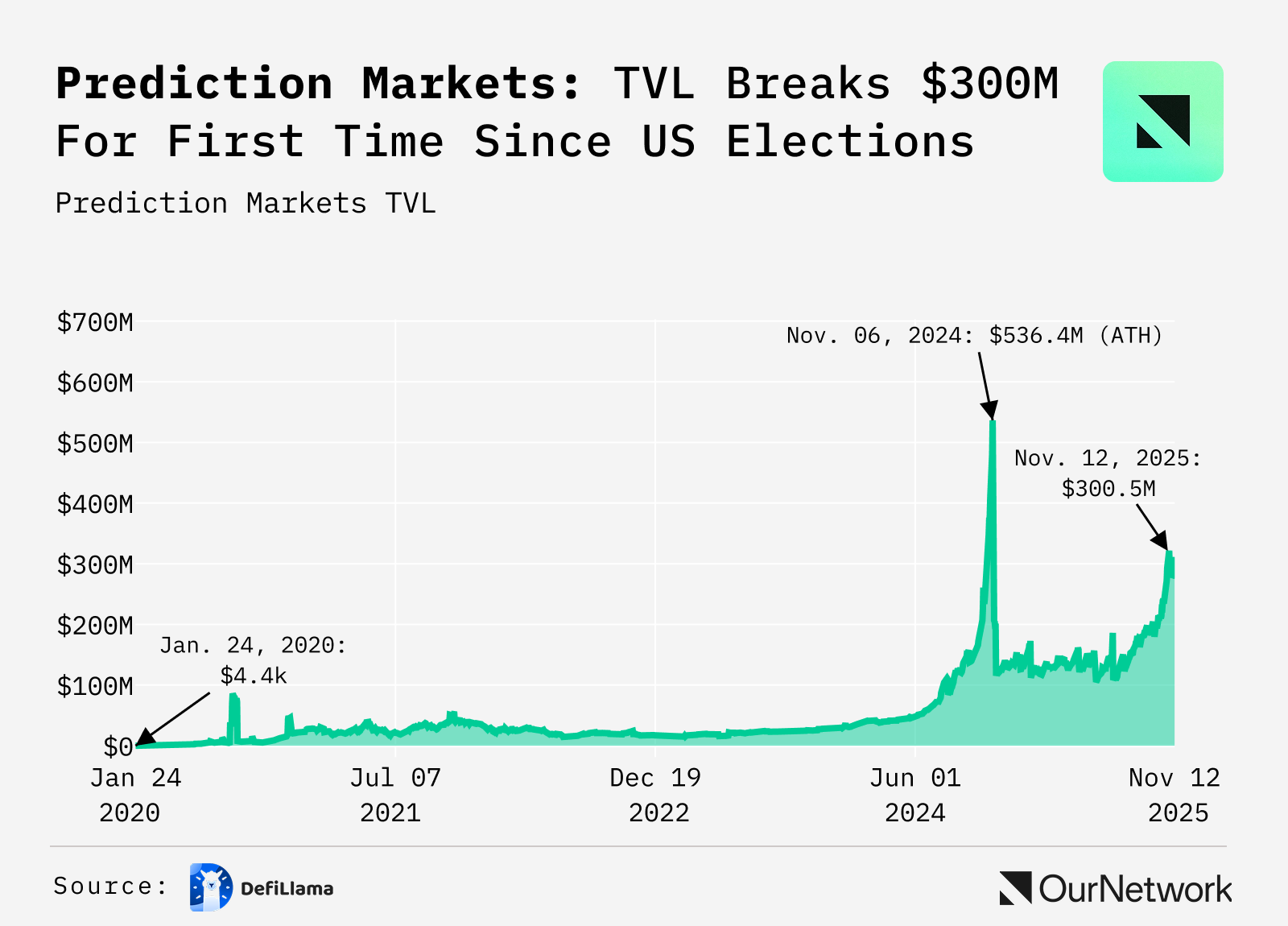
Volumes that peaked during the 2024 U.S. presidential cycle are now being surpassed, with industry data showing combined weekly notional trades across platforms topping $2B. Total value locked (TVL) across all prediction market platforms, has crossed $300M for the first time since last November.
At the center of this surge are Polymarket and Kalshi. Intercontinental Exchange (ICE) — owner of the New York Stock Exchange — has committed up to $2B in investment in Polymarket, the leading player in this space, valuing it at roughly $8-9B. ICE will also become the global distributor of Polymarket’s event-driven data, signaling institutional finance’s growing endorsement of prediction-market infrastructure.
Although not onchain yet, Kalshi has publicly confirmed plans to move onto blockchain rails. The company has already launched partnerships with Solana and Base through its “KalshiEco Hub,” paving the way for on-chain market integration.
Other emerging platforms — including Opinion, Limitless, and Myriad — are also competing for users in what’s shaping up to be one of the most dynamic, data-driven frontiers of modern finance.
In short: what began as a niche arena for election speculation is rapidly maturing into a full-fledged financial-market infrastructure — bridging the worlds of blockchain and institutional capital.
– ON Editorial Team

Polymarket | Opinion | Limitless | Myriad Markets


Polymarket 🔵
👥 Seoul Data Labs | Website | Dashboard
📈 Polymarket Is Winning Prediction Markets. Capital Efficiency Is Next.
Polymarket has led onchain prediction markets with $23B+ in cumulative volume since its launch, including a peak of $371M traded in a single day during the 2024 US presidential election. Its USDC-powered platform has attracted hundreds of millions in capital, fueling growth that extends beyond election hype. Yet, much of this USDC remains idle in wallets and smart contracts, resulting in low capital efficiency and limited value creation for both the protocol and its users.